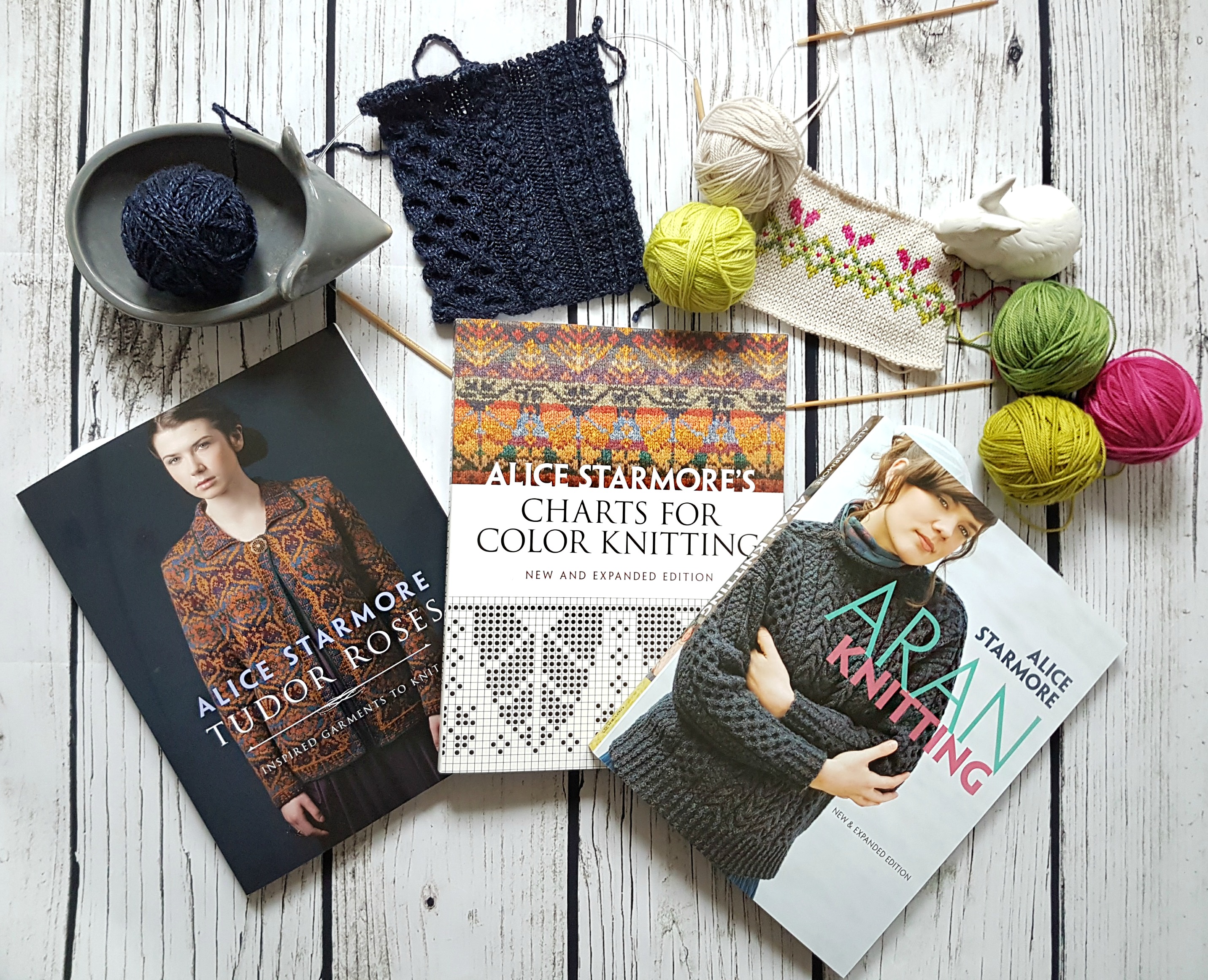
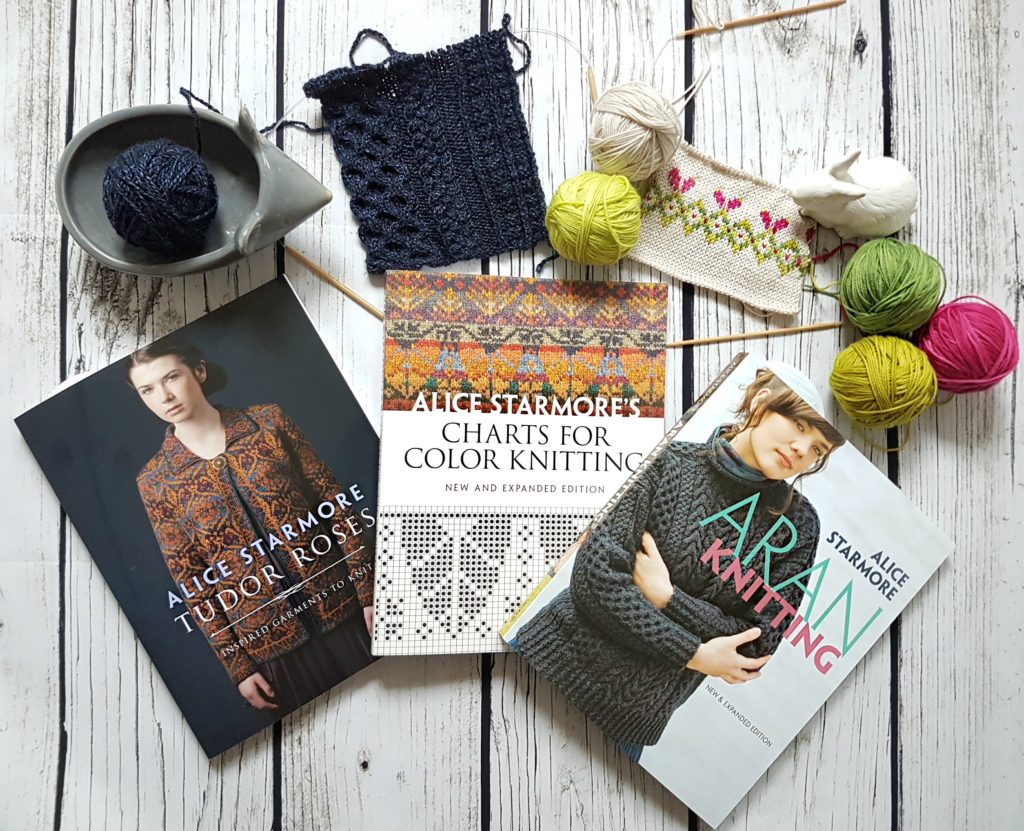
In our current time, it’s increasingly tempting to keep our patterns digital. I know I certainly have more than my fair share of purchased PDFs that I have knit but never printed off. But there’s a special place in my heart for knitting books, and I think they are a frugal knitter’s friend. If you would knit at least 4 patterns from the book, the cost is less than if you bought 4 different pdfs online. And as a writer, I love the tactile feel of having books and refer to them regularly- they are brilliant for inspiration, or learning more deeply about an aspect of knitting. And I feel like Alice Starmore has written some of the most valuable and timeless knitting books out there.
A perfect example is Alice Starmore’s Aran Knitting: New and Expanded Edition. These designs are unisex and timeless, and there’s a great section at the front explaining the history of Aran knitting which sorts out some of the facts from fiction around this traditional style. This is an especially valuable book for any designer who wants to design with cables – not only is it a rich resource of stitches that can be combined in endless variations, but it talks about the construction in a helpful way. One critique I have of the book is that the designs contain multiple charts; as in, each stitch used in the design has it’s own separate mini-chart, and you have to move from one chart to the next while still on a single row. If you are an experienced cable knitter this is easier than it sounds, but if you are a beginning cable knitter this will likely prove to be a hurdle. It might be worth recharting it out for one large chart that contains all the mini charts so you can review line by line. You can see what I mean in the photo below:
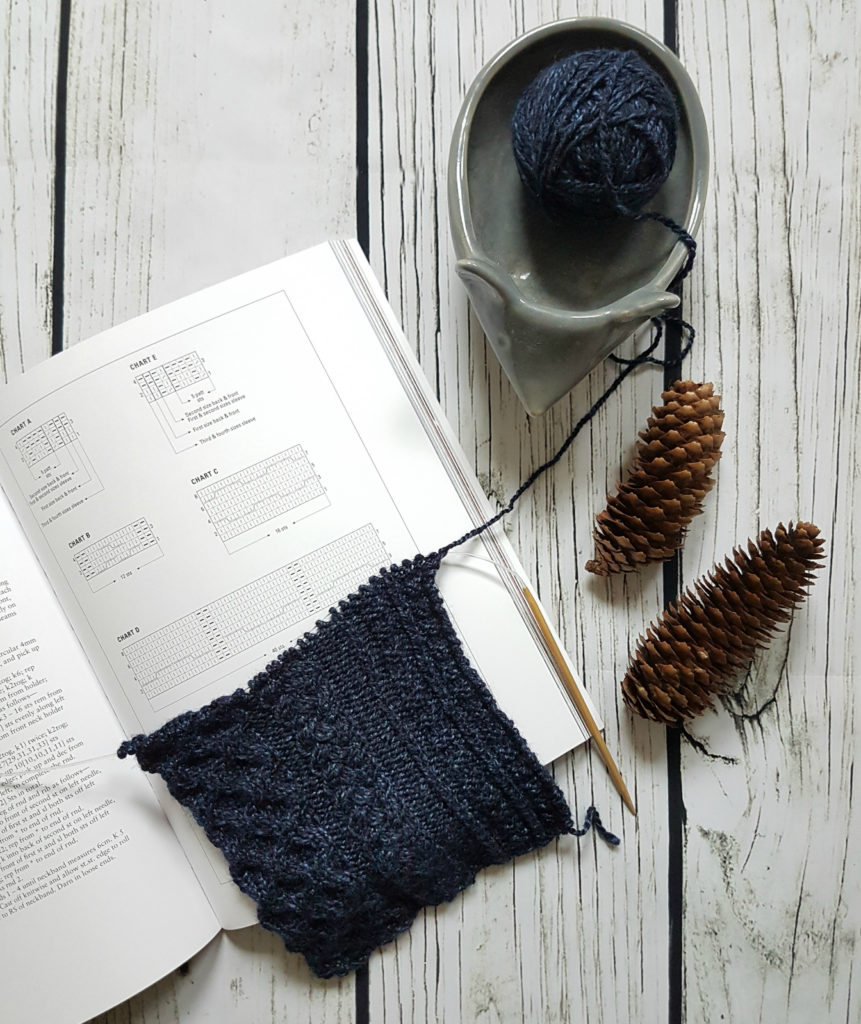
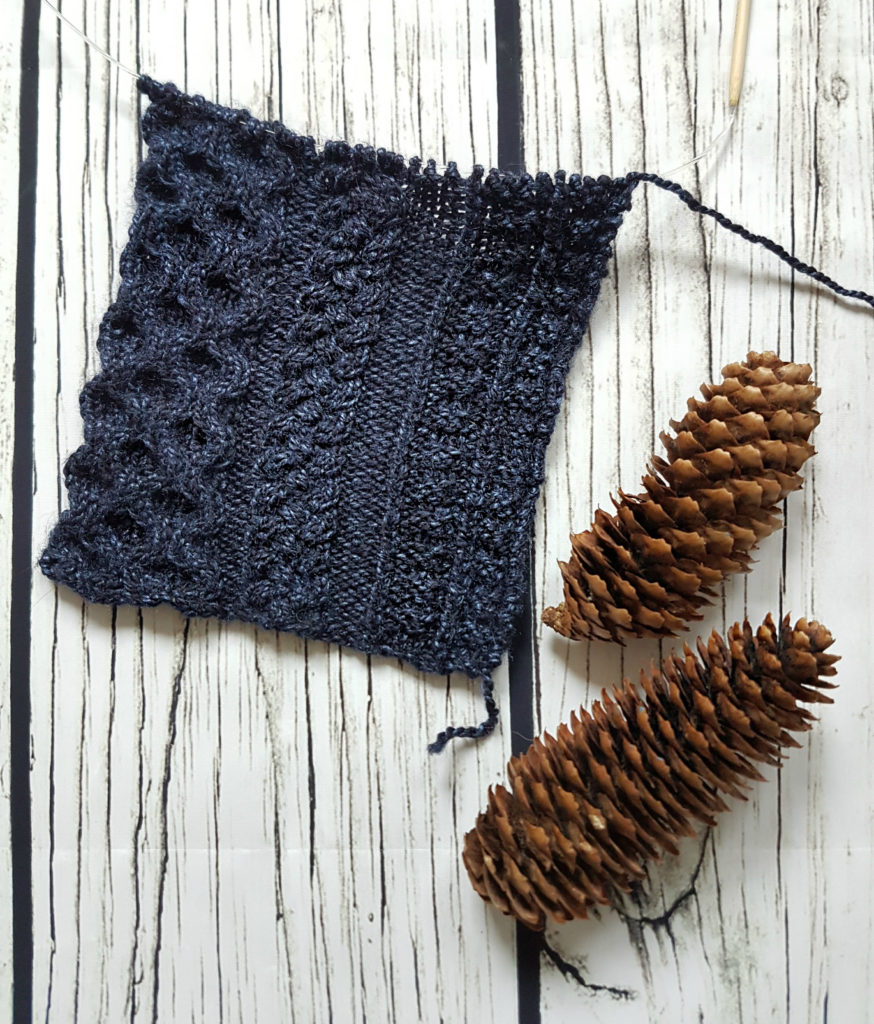
That lovely navy swatch is my swatch for Na Craga, the cover sweater that I have loved for years. I’ve swatched in Berroco Ginkgo (52% silk, 48% wool), in the Lapis colourway. I feel like I’d love a classic cabled sweater like this in a classic, wear-with-anything sort of colour like navy, cream, or grey. I’m really happy with the resulting swatch- it helped convince me that the chart switching wasn’t that big of a deal, and I really like the almost tweedy flecks that the silk gives the yarn, while looking quite sumptuous. The resulting fabric has drape and is not very crisp, which I think would be a real positive in a densely cabled sweater. If anyone is concerned about a cabled knit making them look bulky, consider a yarn with a bit of silk in it for drape (but please swatch – and wet block that swatch!).
If you want to see how the sweaters from this book have turned out for other knitters, it’s worth perusing the finished knits from the book on Ravelry. So many beautiful knits!
You Should Totally get This Book If: You love cables and classic unisex-style sweaters that are utterly timeless, and you can handle using multiple charts.
You Should Definitely Not Get This Book If: You are a beginning knitter, or if you don’t really like knitting cables.
If cables are not your thing, how about colourwork? Alice Starmore’s Charts for Color Knitting: New and Expanded Edition is the colourwork bible. Hundreds and hundreds of charts arranged by country of origin.
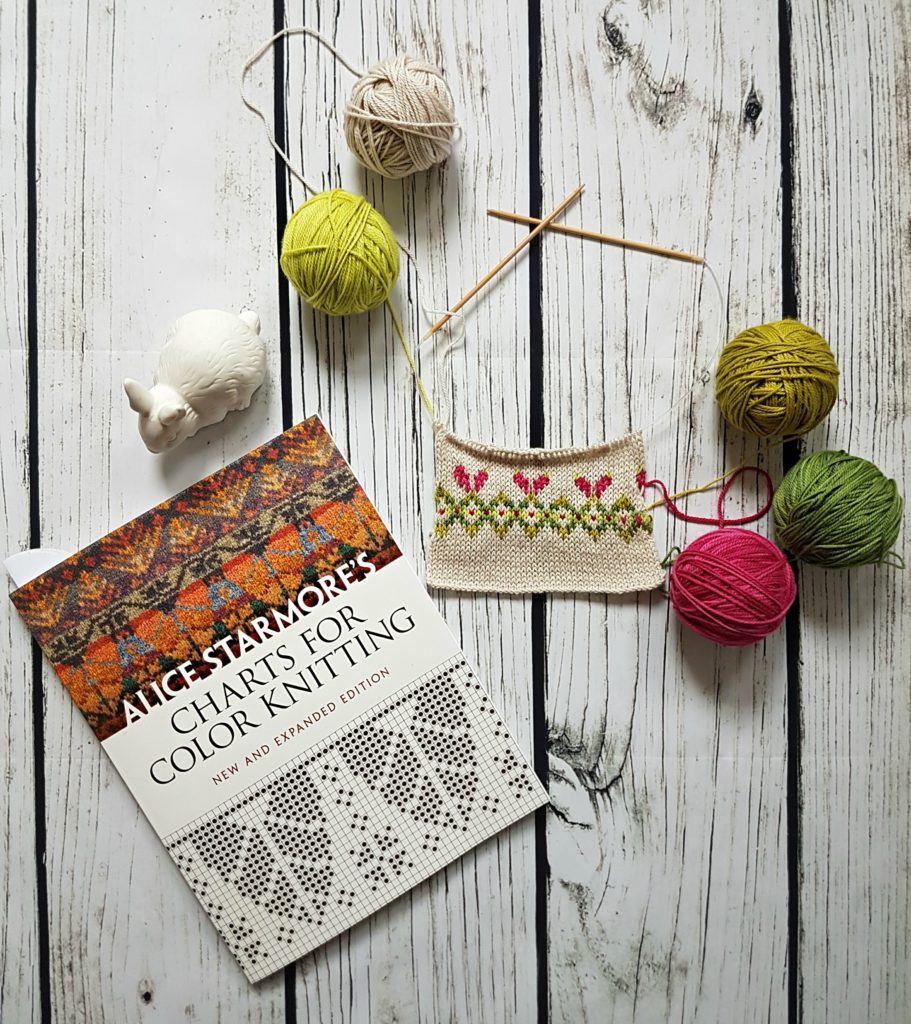
This book starts off with a great section on designing colourwork sweaters and the different types of colourwork from various cultures, including borders and allover designs. The charts are rendered in black and white, which gives you a lot of freedom to determine what sort of colours and how many you would like to use.
I swatched using SweetGeorgia Party of Five Mini -Skein set in ‘Snapdragon’, and had fun playing around with the wonderful colours in this set. I have a tough time resisting mini skeins, and sets like these are well suited to experimenting with colourwork if you feel unsure of your colour matching abilities.
I often don’t feel very confident putting colours together, and there have been many times I thought I had my colours all figured out, swatched, and ended up totally disappointed. Here are my tips for taking the guesswork out of colourwork, if you also sometimes feel a little intimidated:
- Just use two colours. There’s no rule saying that because a chart or pattern calls for 12 different colours you have to use 12 different colours. Low contrast (light grey and medium grey, for example) or high contrast (black and white, or dark purple and light pink) can be used for any chart.
- Try using a gradient yarn with a solid (or heathered) contrast colour. Or mix it up and use two different gradient yarns that contrast with each other!
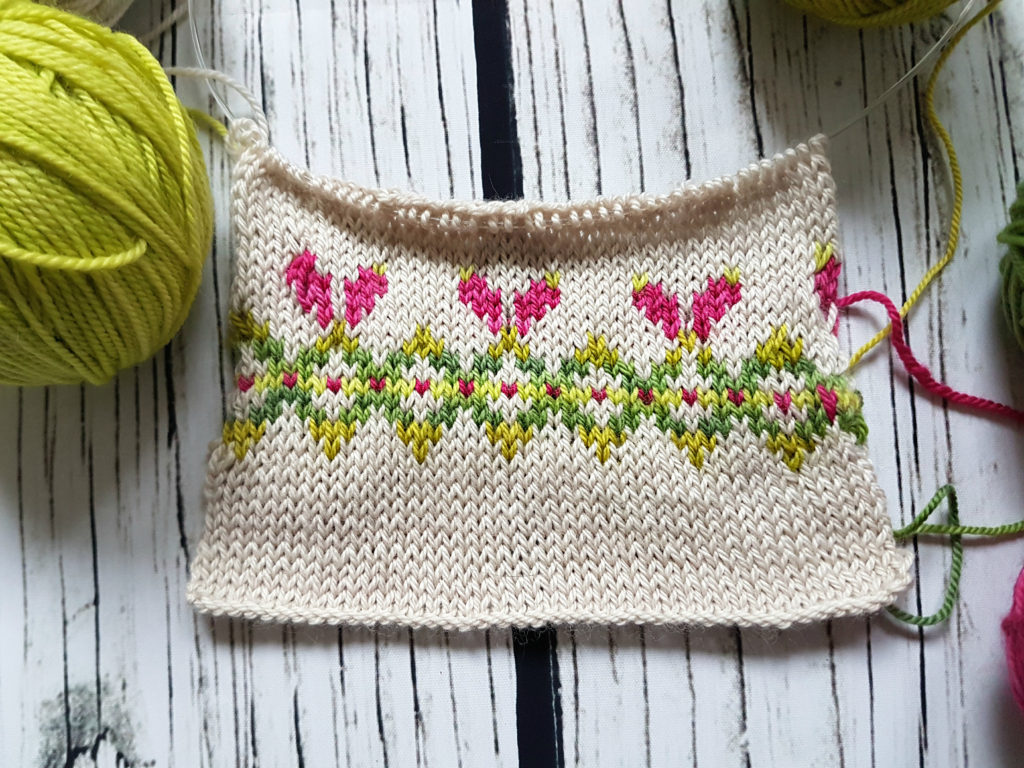
- Use a mini skein set of pre-matched colours. A mini skein set with a good mix of light and dark is ideal, because they have already done the hard work of figuring out which colours would look good together. This can provide you with endless opportunities to try combining colours together in different types of charts and developing your abilities to figure out great combos. For example, this was my first swatch (chart is found on page 44, the Sweden section):
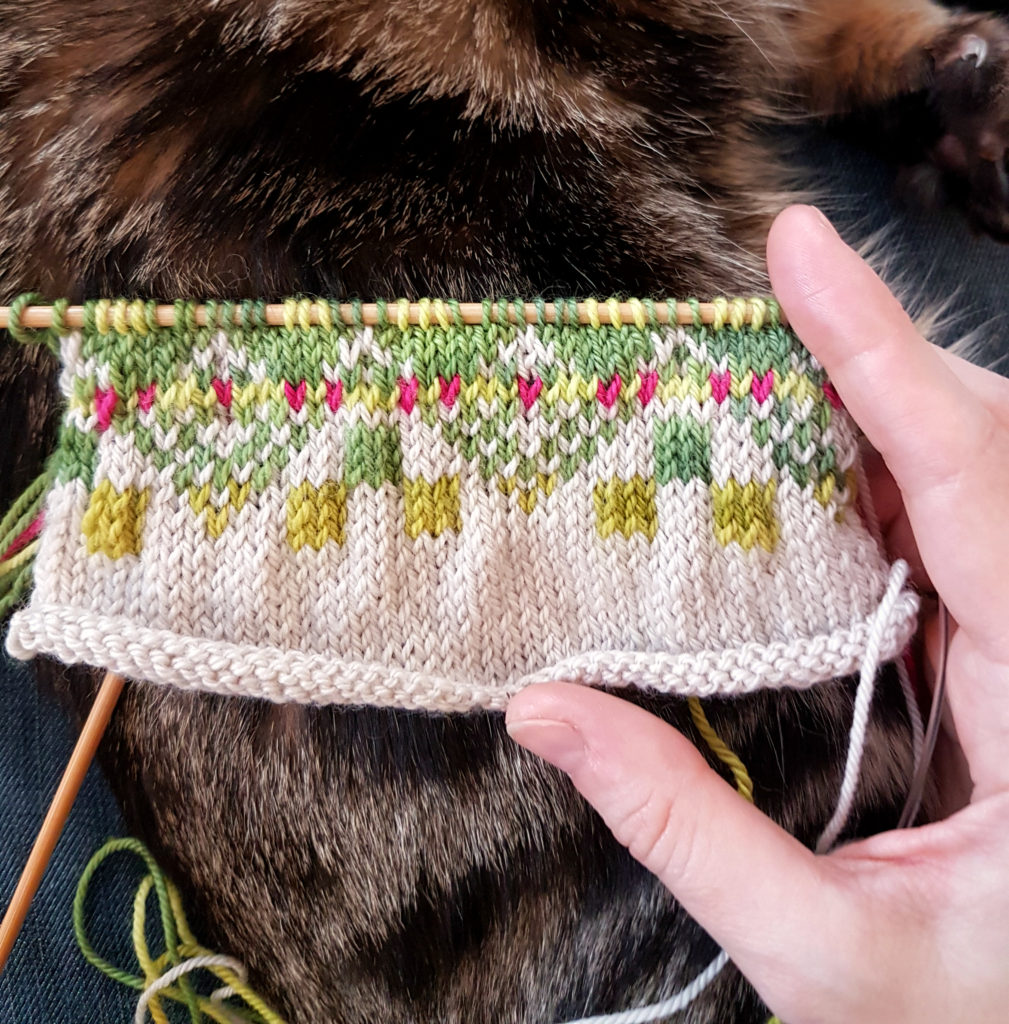
While I liked the way the pistachio colour flowed into the medium green, I tried to reverse the contrast and make the background green above the middle line, and it totally didn’t work. But that’s okay! Swatching is brilliant for playing around with colour. I was much happier with my second chart attempt (also on page 44):
You Should Totally Get This Book If: You love colourwork and the idea of playing around with new ideas, and you want a solid resource that gives you a massive array of choice and possibilities.
You Probably Should Not Get This Book If: You want help choosing colours to go together, and you like a lot of advice about colour. The real gold of this book is the focus on designing with colourwork and the black and white charts, not advice on colours.
Tudor Roses is unlike any other knitting book you will encounter. The concept centralizes on 14 women from the Tudor dynasty, which is in and around the era of the infamous Henry VIII. There is a pattern inspired by each woman, and it is prefaced with a quote from a letter that each woman wrote hundreds of years ago. To me this is like a knitter’s coffee table book, in that it is such a work of art. I have read the letters so many times, that even if I never knit a single pattern I would keep it. There have been many beautiful knits from this book, and you can see all the patterns on Ravelry here. Not all of them are colourwork, either! One of my favourite patterns is Lady Mary, a beautiful colourwork wrap:
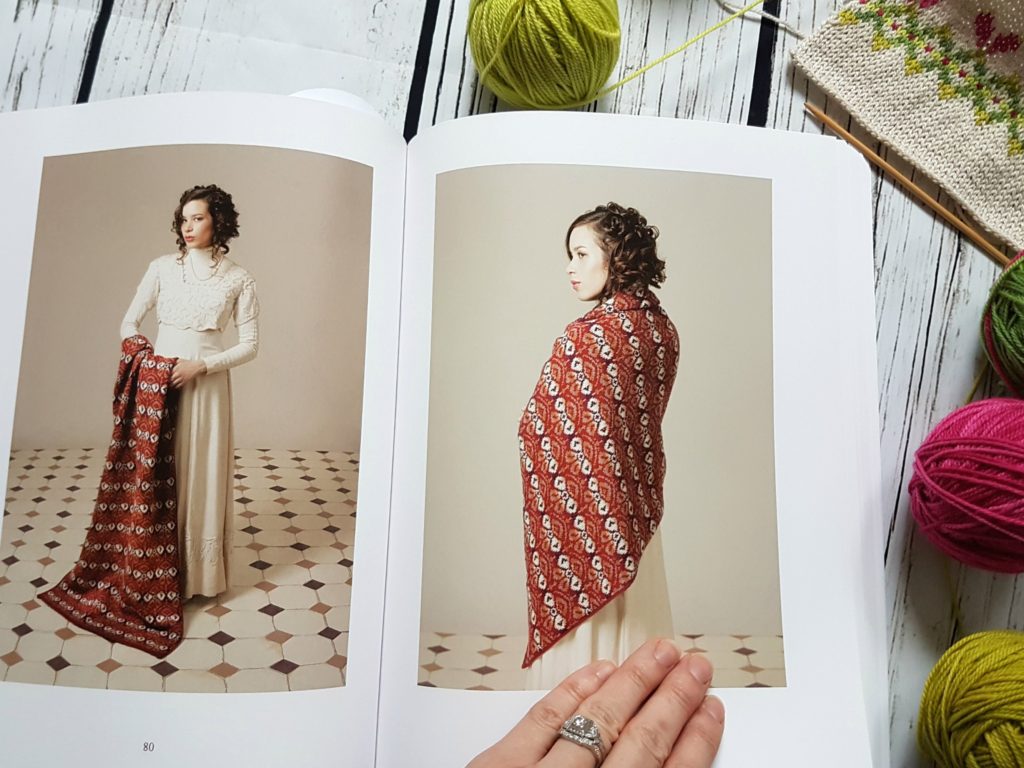
The design calls for 9 different colours, but you could achieve a very similar effect with using a gradient yarn and a contrast colour. My other favourite is Katharine of Aragon:
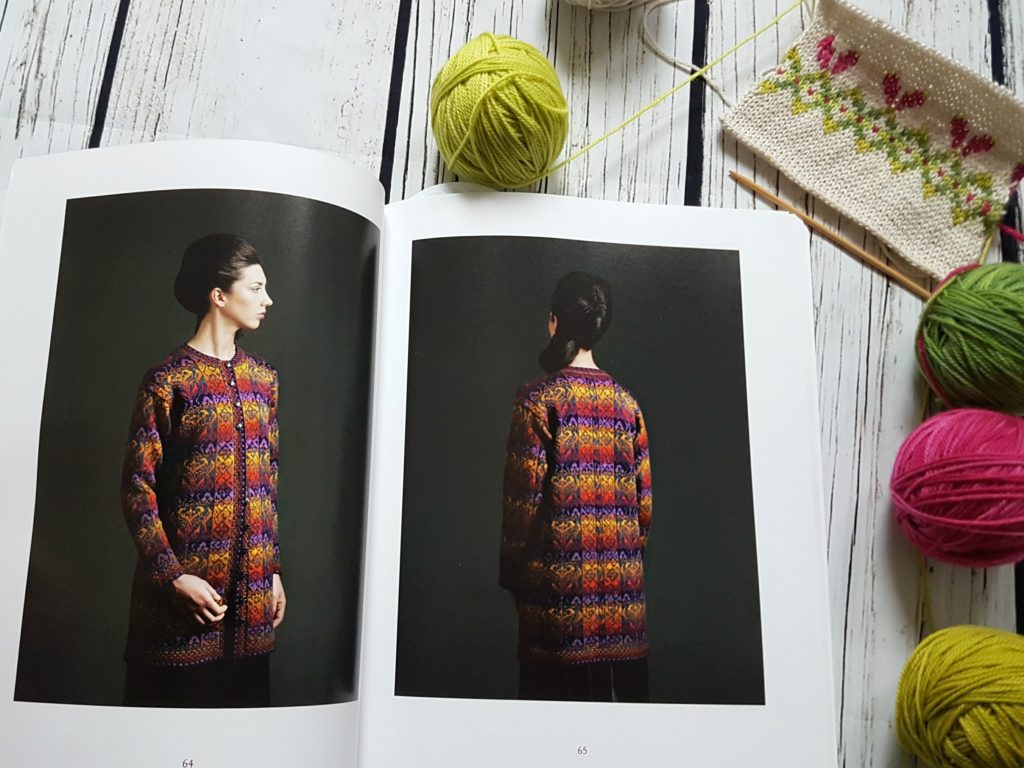
This stunning jacket has 13 colours, but there is a handy chart that indicates the darker and brighter colour values, so it would be easy to convert to a two-colour version. You could also customize your own with fewer contrasting colours. While most of the patterns feel quite dressy (they were inspired by queens and princesses, after all), if you feel like modifying you could change them up or use different, more casual colours. Imagine Lady Mary just in shades of cream and grey, for example.
This Book is Definitely for You If: You design garments, feel comfortable modifying patterns or experimenting with colour, or if you have been wanting more dressy knits in your life.
This Book is Totally Not for You If: You don’t find the concept a little interesting and you prefer your knits super simple and straightforward.
The good folks at Dover Publications have very kindly offered a coupon code for 25% off of ANY book on their site. Really, any book at all! There’s loads of knitting titles to choose from here, and you can click around and check out all their other craft books, if you happen to be multi-craftual. Here’s the coupon code: WRBG
Who doesn’t love a giveaway? Dover Publications is also giving away one copy of Tudor Roses (US and Canada addresses only. I’m sorry international friends!)
[promosimple id=”b328″]
Entry for the giveaway will close on Wednesday, March 8th at 5 p.m. EST. The winner will be announced on Friday, March 10th!
**This is a sponsored post from Dover Publications. All opinions are entirely my own.