

Sooo…… if you have been on Instagram in the last few months, the conversations around racism in the crafting community are hard to avoid. For a really long time, I thought that when a person of colour was speaking about their experiences, my job was to be quiet and give them the floor. After all, I felt that they didn’t need me chirping my little white voice up to lend strength to what already seemed to me to be strong, powerful truths that needed to be said, and needed to be heard. My job was to listen, right? After all, I’m anxiously awaiting the 3rd season of Dear White People! Obviously I’m an ally, right?
Nope. That’s only one part of of the job, the easier part. In conversations both offline and in direct messages, it was clear that I needed to stand up and verbally support diversity and inclusion. So I did what I always do when I want to learn more about something – I read some books. (Although Dear White People is an excellent show on Netflix I highly recommend).
Racism isn’t just the obvious horrible stuff of burning crosses or spray painting racial slurs on the side of mosques or temples. It’s treating black, indigenous, and people of colour (BIPOC) as less than a white person. If you are a yarn shop owner and thought that a person of colour won’t buy as much yarn as a white person, that’s racism. If you told a crafter of colour that you’re surprised that ‘people like her’ knit/crochet/embroider or whatever, that’s racism. Because in both of those instances, you are not seeing her for a person just like yourself, you are seeing her as an ethnicity of which you have already decided certain things about. And I’m not saying to be mean, I saying it because as a white person, I had a really narrow definition of racism before reading more widely and thinking about the conversations happening online.
If you are white and want to figure out how to be an anti-racist ally, there are a lot of great reading resources out there that can really help- especially if you feel like you are afraid of saying the wrong thing. The last couple of months, I’ve been thinking through what I can do to be better, to be anti-racist. I don’t have it all figured out, but if you are looking to better understand the conversation and why it’s important to understand the subtle (and not so subtle) racism embedded in our everyday world, all it takes is a bit of reading and some thoughtful reflection.
A Few Posts to Get You Started:
Start here if you need to get a handle on the beginning of the conversation: a great article in Vox that is well researched and sourced.
Wooly Ventures wrote a great post about reflecting on her travels and some of the othering she did without realizing it (evaluating other countries and cultures through a white lens; been there, my friend.)
Shireen reflects on a racist conversation she overheard in the ladies room at a knitting event.
Some Great Books That Are Probably in Your Local Library (even better to buy them and support the authors, if you can afford it!)
Why I’m No Longer Talking to White People About Race
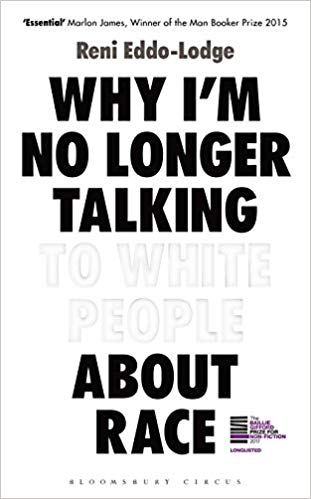
This was the first book I read, and while it focuses on racism in Britain, it applies all over. Very engaging and accessible, and a great dissection of racism and the white denial that supports it.
So You Want to Talk About Race
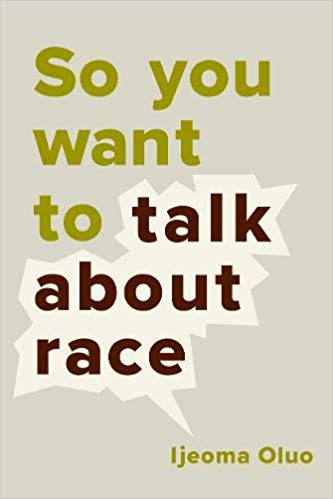
An American perspective of the above- an honest reflection of race and racism in America, and how it infiltrates almost every aspect of American culture.
White Fragility: Why It’s So Hard for White People to Talk About Racism
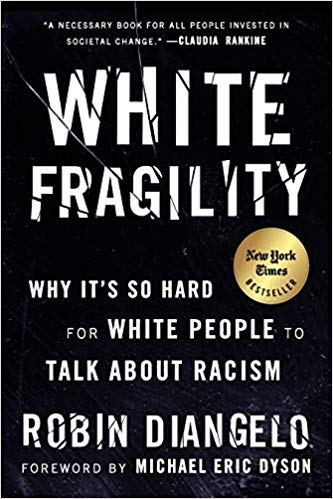
This book examines the defensiveness that so many white people feel when conversations about race are happening, and how white silence contributes to ongoing racism. It’s a great choice if you feel yourself getting really defensive about the conversation, and want to better understand your feelings.
And Layla F. Saad’s Me and White Supremacy Workbook, which is an amazing self-discovery tool to work through white privilege. It showed how complicit we are in the many subtle ways racism is woven into our everyday interactions and cultural biases. I know the title is uncomfortable, but that’s the point- trying to dismantle racism shouldn’t be about keeping white people comfortable. Growth is uncomfortable by its very nature, but without growth, we stagnate. We never get to see how interesting and beautiful another perspective can be.
If You Are a Business…..
If you are a craft or yarn company and want a good example of how to be an ally, take a look at how Tin Can Knits voiced their thoughtful reflections on how to be more anti-racist.
And finally… if you are selling products and trying to capitalize on the recent focus on racism, diversity, and inclusivity in the crafting world; then you need to rethink your strategy. The recent situation of Madelinetosh creating a yarn colourway called ‘Inclusive’ came across as being racist all by itself, and also trying to profit off the conversation. If you’ve missed this raging misstep from a company that is big enough and old enough to know better, You can check out the colourway here (note the closed comment section), then the first apology post (comments this time!) and the third is here.
By the way, the book links are not affiliate links. See previous paragraph about not profiting off the conversation. 😉
Thank you for this Julie. Lots of great resources shared here and I really appreciate hearing your perspective.
Thanks Tanis! There are so many great posts and instagram accounts, but I thought perhaps some books where people could read in-depth and get a deeper understanding might be helpful. Probably not for everyone, but it’s worth trying…. even if I don’t quite get it right.
You really (mistakenly) centred yourself in this discussion and forgot to lift up the voices of BIPOC doing the emotional labour in social media.
Hi Gwen,
I’m sorry, I was focusing on some links that I thought might be useful, and was not specifically about listing the many, many wonderful BIPOC voices in social media…. There are many fantastic contributions by black, indigenous and people of colour taking on the emotional labour of trying to educate. I can list some instagram accounts that may be helpful in a future post, but the narrow focus of my post was just a small bit of my journey of educating myself on my white privilege, so that those also holding white privilege could engage with education in a way that did not require more emotional labour from BIPOC.
Thanks for your comment, I will spend more time thinking about this.
To be honest, I was glad that you chose some different social media posts including those by BIPOC women, e.g. Shireen, instead of the same list of posts from January that seem to be the approved and required ones somehow. I think you just showed that three months in, the conversation is moving on, and that different people have had a voice in it. The same original Instagram conversations were linked so many times that it started to feel like people were checking off a list of expected links in order to show their solidarity. It was all so identical that it started to feel perfunctory. I read a really thoughtful post by a BIPOC designer in which she basically stated that she’d rather see people walk the walk rather than just listing the same posts and stories everyone else was listing, and I think lifting up a new voice like Shireen’s, rather than the same posts from weeks ago, is doing that.
Thank you for your post, Julie, and the many great resources. As an indigenous woman, I have followed the conversation, sometimes with admiration & sometimes with dismay (at the pointless vitriolic attacks some women are slinging). Thanks for the work of all the women who intend to deepen and further the conversation and turn it into real action.
Hi Brenda,
I don’t feel super comfortable with speaking up, but part of being actively anti-racist means to support verbally. I was pretty horrified when I found out that white silence is really another tool of oppression, so even though I am by far an expert, I figured if others wanted to explore white privilege and read some books that go at a speed that is a bit easier to digest without getting defensive, then I wanted to share. I’m not always going to get it right, but that’s part of learning. Thank you for your patience while I learn. 🙂
Thank you for your work you are doing for yourself and then for sharing the resources you’ve found helpful with us. I hope I didn’t sound like I was judging you – we all need patience and kindness to help us remain open to growth and new ways of being in the world. I’m not sure any community is immune to racism – in mine, I routinely hear people talk about “chinks” etc.
I really like the analogy Laura used “see privilege as a difficulty rating for games. If you start the game of life as a cis white hetero man with lots of money, you are choosing the easiest difficulty. Being the same thing but homosexual or black would increase your difficulty and so on. Less doors would just open for you or fall in your hands etc. You would have to work harder.”
Great resources! Thank you for sharing this. Just a wee correction: it’s Layla F. Saad, not M. 🙂
Thanks for the catch, Kaeleigh! I corrected it. 🙂
I’m really not sure why I must consider my “voice” to be any color at all, let alone “white” and also “chirping,” Julie. In my nearly 60 years on earth, I have never been so aggressively pushed to contribute to this “conversation” in only one accepted way: from the position of consigning myself to a camp based on what I look like! I have, perhaps mistakenly, understood the struggle to be one toward color-blindness, rather than continuing the divide created by grouping people (especially artistic/crafting/stitching women!) into ethnically- and racially-based caucuses. I have no more automatic like or dislike of someone based on their race, than I would for any reason. Nor do I believe it moves us forward in any way to demonize or canonize any one group of people based on such externalities. In hesitating to participate in this all-in thinking, I emphatically state that neither do I deny that “people of color,” and by that I refer mainly to black Americans (since I am here in America), have been mistreated more often than white people, nor do I desire to “whitewash” the despicable history of slavery, or civil rights abominations, in my country’s past. However, the way in which many are choosing to address these topics do not, in fact, invite “white” people to the table for a discussion; instead, it’s a dressing-down, and a shame-fest, wherein I am supposed to answer for an ideology that I neither created, believe in, nor participate in, namely racism. I think people’s differences are interesting and delightful, which is the only context in which I would “view” another’s ethnicity as worthy of labeling “different.” I’m tired of being told that I am a latent racist, that I commit random acts of racism that I’m really not aware of, etc. etc. No one who has accused “me” (I.e., “white girl”) in the world of social media, has ever actually met me or spoken with me! And yet, I’m expected to sign up as the offending party. I’m not responsible for the stupidity and hatefulness of others who resemble me physically. I’m also not less of a person, any more than someone who calls herself a person of color is less, because of my ethnic/racial background. Few people respond in any way but fawningly to white people diminishing themselves “for the cause,” so I know I may be in dangerous territory here, with regard to backlash. But, I thought we were invited to a “conversation,” a civil discourse? That hasn’t been my experience lately. I guess I’m not understanding how furthering the divide, the assumed collective guilt, is expected to bring about unity? I can only speak for myself, and, perhaps therein lies the issue for me— I believe in individual personal responsibility and I expect the same from my fellow man/woman— I do not think anything when a black woman buys the same yarn I do, but this: wow! A kindred knitting spirit! If some ignoramus thinks or acts otherwise, and he or she is in my presence when doing so, I would not hesitate to address that with them. But I will not condemn myself for such thinking when it comes from someone who is not me. By the way, also worth noting: my life experiences and personal history do not correspond with other people with my ethnic/ racial background on those grounds alone. Many do not even come close. My “privilege” in no way matches, for example, all celebrities, be they black, white, or other. I have far more common ground with black women in my church, or my socio-economic class, or my crafting community than I do with white women like Reese Witherspoon (who happens to be quite a few shades whiter than me) or anyone in Hollywood (not to pick on Reese Witherspoon, of course!) If we truly desire to understand one another, and have an honest round table on such issues, then maybe we should stop using insulting catch phrases such as “white privilege,” “white ignorance,” and “chirping white voices.” That diminishes all of us, and shuts people down who might actually have worthwhile thoughts and questions.
You’ve given me a lot to think about, Melissa. Diversity includes a lot of diverse perspectives that don’t necessarily line up with what we think we’re ‘supposed’ to think. Socioeconomic privilege is definitely another conversation that is very worth having, as well!
I appreciate that, Julie. I really love the possibility of each of us respecting one another based on our having intrinsic worth as humans, not as members of a specific group. That’s really what I am trying to express— what a tragedy for us to just flip the offenses against one another based on perceived qualities manifested in racial and ethnic and gender identities, all factors we have no say in.
I must agree, Melissa. I’m thrilled that we’re discussing racial equality, but (call me odd), my attitude has always been, treat people based on who they are, not what they are, and expect others to do the same for me. I think if all of us can work on that… we should be in business. I hate the way we all are pushed into being placed in categories simply for our skin color.
Yes, Heather. That’s exactly what I’m saying. It just is wrong all over, and I’m really saddened by the divisiveness it’s causing. Feels to me more like an unraveling than a knitting together.
Acknowledging certain things is not about shame.
Being color blind doesn’t help anyone really, because we are in fact, not color blind. Pretending that we are all the same color sounds like there is something (blackness?) to hide. Treating people the same is of course the goal but we can accomplish that without ignoring our differences.
We don’t all live the same lives and our skin colors certainly impacts us and the path we take or are able to take.
I don’t only hold white privilege, my white privilege is only one part of me. I am cis and hetero, I have grown up in a financially stable environment. I had the privilege to grow up in a country with a good welfare & health care system so I never had to be deeply afraid for my live. I am able bodied and had access to a good education system. There are other areas where I don’t hold privilege. My gender & body size for example.
I don’t compare myself to Reese Witherspoon, nor to Michelle Obama. There are many other privileges at stake here. Of course, being white doesn’t give you a free for all ticket. Nor does being black mean that you’re hopelessly lost.
I read an article once that suggested to see privilege as a difficulty rating for games. If you start the game of life as a cis white hetero man with lots of money, you are choosing the easiest difficulty. Being the same thing but homosexual or black would increase your difficulty and so on. Less doors would just open for you or fall in your hands etc. You would have to work harder.
Choosing an easy difficulty however doesn’t mean that you will master this game. You can still be bad at it, you can still get unlucky. And of course there will be people who will exceed on the hardest difficulty no matter what.
I know we haven’t created white supremacy or racism, but I think we still benefit from it. Doors are open for us that are closed for others who may deserve it more. And we’re not speaking up about it enough.
I read most of the books Julie recommended and I can only recommend the same.
There is a reason we get defensive about things like that, but we have the means and the power to broaden our knowledge, to listen and to grow.
Laura, while I agree that some people are born with more obvious “advantages” than others, and while I acknowledge that people can suffer differently from others based on what they look like, I also understand that there is no such thing as an equal playing field in life, for anyone. Yes, certain factors figure into the opportunities we have at the outset, but we will never achieve utopia, nor should we beat each other up trying. It is, and always has been, futile. This is life on earth, after all, with all its attendant frustrations, injustices, joys, and successes. We here in America enjoy a very accessible and attainable freedom to make the most of our human lifespan. Things will never be without blemish within human relationships, so we do the best we possibly can, and, when we know better, we do better. I still maintain that we should treat each other with the love and respect each precious life deserves. Constantly finding groups to blame or credit, using uncontrollable qualities such as race, gender, and ethnicity as the basis for that treatment, has always been, and continues to be wrong.
Also, Laura, my comments are not a result of defensiveness, as you suggest. This is part of the problem with this mindset, that raising some questions about the way in which these issues are being handled must mean we are being defensive. It’s as if social media has caused us to forget what is at stake in a “conversation,” namely that people will raise points, questions, thoughts, and, in this manner, a back and forth will take place. From that, we get new understanding, insights, intelligence. What’s missing, of course, is the personal presence, a facial expression, a touch on someone’s arm, eye contact. Absent these real relationship markers, we have a bunch of words on a virtual page. Sometimes we have a photo of the person. It’s quite disconnected and incomplete, so there is even more room for misunderstanding or anger. It’s better than not having the “hard talk” at all, but it’s not without its problems. Raising concern over the response to an issue is not the same thing as negating the issue itself.
Hi Melissa,
thank you for your reply.
I do think we want the same thing, for everyone to be more respectful towards each others.
Maybe the problem could be solved if everyone just did that. That’s utopia too though, isn’t it? For everyone just to be nice and love each other no matter the race, gender or sexual orientation.
I think some issues go deep, some issues you have to unpack, some issues you have to go to the source to make them go away and sometimes that hurts.
There are differences in our lives that go back to race that I think we need to address at the root.
Why is it, that some have to fear for their lives when they get pulled over by the police because of a blown out light and some don’t?
Why is it, that some will surely spent years in prison for minor crimes while others get off easier?
Why is it that some people get followed by store detectives on a regular basis and some don’t?
Why is it that some patients with the same illnesses get better care and others don’t – For example, mortality rates of black women with cervical cancer are twice of that of white women and it has nothing to do with medical differences.
(some links: https://www.health.harvard.edu/blog/racism-discrimination-health-care-providers-patients-2017011611015, https://edition.cnn.com/2018/05/11/us/everyday-racial-profiling-consequences-trnd/index.html?no-st=1555578018, https://news.stanford.edu/2016/06/28/stanford-researchers-develop-new-statistical-test-shows-racial-profiling-police-traffic-stops/ etc.)
There are differences in our lives that are this significant and we have to address them and we have to address that race is a factor in those stories, in those numbers and statistics. I know you’re not trying to argue that racism doesn’t exist. So – who needs to stop racism? We cannot leave this to those who have to suffer from it, they can’t win this fight alone. It’s also utopia to believe that full-blown white supremacists will wake up one day and think “You know what, from today on I’ll be nice”. Its an effort we all have to work on, we all have to be educated on. I truly believe its our turn to do the work.
Laura
Very well said Melissa
Linda, Thank you. It’s definitely a difficult subject to navigate.
Laura, it’s really been edifying (to me anyway!) to have this discussion here, with you and with others. I appreciate the honest exchanges, and am hopeful for more such talk. Thanks for engaging!
Such great resources- denying white privilege really needs to stop. (I also find myself wishing for a workbook for males, Me and Patriarchy- because I realize that is yet another problem that will not be solved until men can recognize their male privilege and how deeply entrenched it is.)
Meanwhile, we can be better anti-racists, in the knitting community and in every community.
Thanks Wanda! Me and Patriarchy, that’s such a brilliant idea!!!
I did leave a very considered and thoughtful comment, but for some reason, you did not post it. It disappeared so I’m at a loss to articulate again my response to this issue. If it still exists (I only wrote and posted it about a half hour ago), I would like to see it here. We do need to have an actual conversation about these things, and I had hoped to offer another viewpoint.
It was just stuck in ‘pending’ zone, sometimes comments get stuck there and have to be manually approved, and I’m not sure why – although I noticed it’s more likely to happen with first time commenters. I’ve just approved any comments that were stuck in pending, with not ‘vetting’- I’m not about censoring.
Bless you, Julie for writing this post! I have two nephew’s who are biracial. They are my sister’s sons and grown now. They have struggled all of their lives because they live in a “white world” where many people, except their family, see them as ” just black”. The first thing people see is the color of their skin. They don’t see all of the beautiful qualities they possess, or their actual Racism comes out in slights in a store. It is seen in looks that people think go unnoticed, when, actually they go straight to the heart.
I feel that I should clarify part of my comment. When I said people see them as “just black” I am speaking of the racist attitudes of others, not insinuating there is anything wrong with being African American. I have a soon to be son-in-law who is African American. My family is very diversified.
I believe our God loves infinite variety. Therefore, so should we.
I agree more needs to be done by white woman (like myself) in combating racism. Whether we personally feel like it, we benefit from a very racist society. Racism is more than acts it’s infiltrated every part of our culture and requires anti-racism work. Claiming to not see color or not be racist doesn’t change the fact that the culture we live in is racist and is dismissive to BIPOC who have been hurt by it.
Thank you.
Thank you Julie for these excellent resources! I have been following the conversations happening on Instagram as well but looking forward to diving deeper with the books above. Racism is a very difficult conversation but one that is so necessary. It can hold lasting effects for someone on the receiving end. One of the most traumatic memories of racism in my life happened in high school. My honors English teacher had pulled me aside on our first day of class and said that she felt the class would not be a good fit for me. She thought that the material would be too difficult and recommended that I transfer out. At the time, I kept silent but I wish now that I had reported her comment. My best revenge was earning an A in her class & becoming Salutatorian of my class. Ironically she was assigned to advise me on my graduation day speech but I ended up choosing another English teacher to help me, one who was always encouraging me to be my best.